
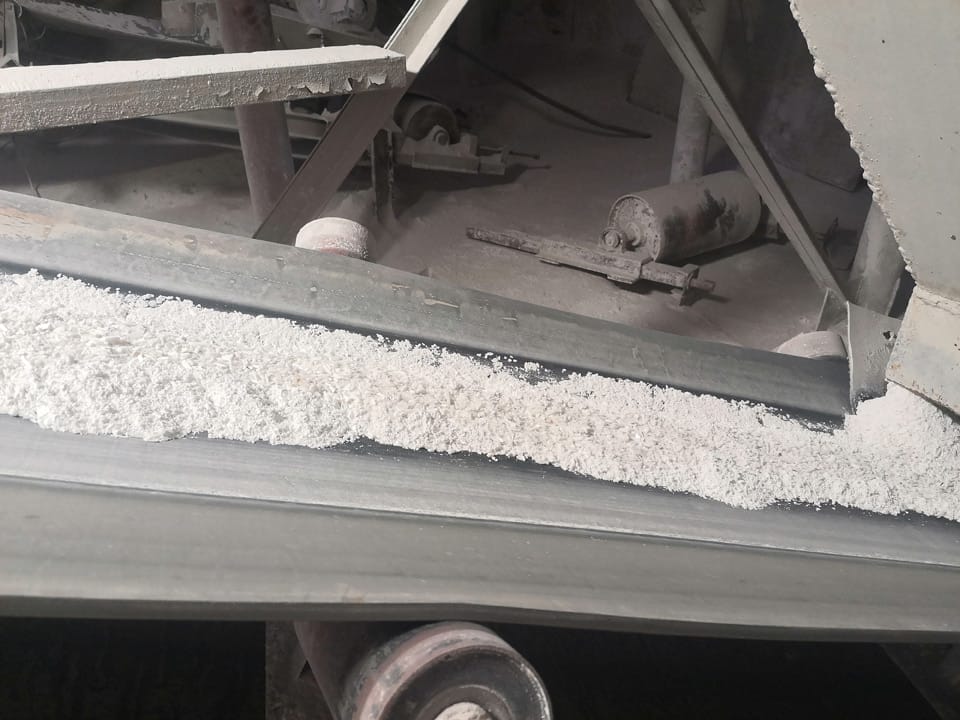
Driven by the surge in demand for biomedical materials and the global goal of carbon neutrality, the preparation process of wollastonite powder is undergoing a profound transformation from traditional extensive to green and low-carbon. Its natural non toxicity and excellent biocompatibility make it a strategic material in fields such as tissue engineering and drug delivery, and green preparation technology is the core path to achieving sustainable development throughout its entire lifecycle.
1、 Three innovative directions of green preparation technology
Low carbon beneficiation and purification technology
Traditional mineral processing of wollastonite relies on high-energy physical separation, while green processes combine photoelectric mineral processing with biological leaching technology to achieve efficient removal of impurities. For example, using a specific wavelength light source to identify the optical properties of mineral surfaces, combined with the selective dissolution of impurities by microbial metabolites, can reduce mineral processing energy consumption by more than 40% while reducing the use of chemical agents. A certain enterprise in Jiangxi has improved the purity of wollastonite concentrate to 95% and achieved a comprehensive utilization rate of 90% for tailings through this technology.Low temperature dry surface modification
In response to the problem of poor compatibility between wollastonite and polymer materials, green modification technology has broken through the high-energy consumption bottleneck of traditional wet treatment. By using plasma assisted dry modification and introducing functional groups through vapor deposition technology below 80 ℃, the energy consumption of the modification process is reduced by 60%, and there is no wastewater discharge. This technology has been successfully applied to medical wollastonite/collagen composite scaffolds, with a threefold increase in cell adhesion rate.Intelligent grading preparation system
Integrating AI visual sorting and airflow grading technology to achieve precise control of particle size of wollastonite powder. By real-time monitoring of mineral particle morphology and dynamic adjustment of airflow parameters, the yield of ultrafine needle shaped powder (aspect ratio>10:1) is increased to 85%, meeting the stringent requirements of bone tissue engineering for scaffold porosity. After adopting this technology, a company in Xinyu increased the added value of its products by 200%.
2、 Sustainable Development Practice Cases
Case 1: Closed loop resource utilization mode
Southern Wollastonite Company has established a full chain system of “mining processing application regeneration”: mining waste is used to produce ecological cement, processing wastewater is recycled after membrane treatment, and medical waste is recovered by low-temperature pyrolysis to recover silicon and calcium elements. This model reduces the carbon emission intensity of unit products by 55% and has been awarded the national level green factory.
Case 2: Development of Biobased Modifiers
Replacing traditional silane coupling agents with lignosulfonates and endowing the surface activity of wollastonite through enzyme catalyzed grafting technology. The modified material achieved a degradation rate of 92% in PBS simulated body fluid after 28 days, and the degradation products can promote osteoblast proliferation, providing a new solution for absorbable implants.
3、 Challenges and Future TrendsExisting technological bottlenecks
The contradiction between energy consumption and cost in the preparation of ultrafine powders (<1 μ m) is prominent
Insufficient long-term cytotoxicity data for biomedical grade products
Low integration of interdisciplinary technologies leads to slow industrialization processBreakthrough technological directions
Biomimetic mineralization technology: Simulating the mineralization process of bone tissue, synthesizing graded wollastonite/collagen composite powder at room temperature and pressure
Photocatalytic purification: using semiconductor catalysts excited by visible light to achieve selective removal of trace metal ions from wollastonite
Digital twin system: By optimizing process parameters through virtual simulation, the development cycle of new products can be shortened by 70%
4、 Policy and industry synergy pathConstruction of standard system
It is suggested to formulate the “Technical Specification for Green Preparation of Medical Wollastonite Powder”, which clarifies:
Unit product energy consumption limit (≤ 0.8 tons of standard coal/ton)
Biocompatibility evaluation index (cell survival rate>95%)
Carbon footprint traceability requirements (full lifecycle carbon emissions ≤ 1.2 tons CO ₂/ton)Industrial ecological construction
Establish a regional innovation alliance for the wollastonite industry and share a pilot platform
Promote the “Green Preparation Certification” system and provide tax incentives to compliant enterprises
Developing a carbon asset management system for the preparation process of wollastonite and exploring carbon trading mechanisms
With the development of cutting-edge technologies such as 3D bioprinting and gene therapy, the green preparation process of wollastonite powder will evolve towards “precision, intelligence, and ecology”. It is expected that by 2030, the global market size of biomedical wollastonite will exceed 5 billion US dollars, and China, with its abundant mineral resources and technological innovation advantages, is expected to occupy more than 30% of the market share. This process not only promotes the upgrading of biomedical materials, but also provides a paradigm for the green transformation of the non-metallic mineral industry.