Wollastonite powder, as a natural needle shaped mineral, exhibits unique tribological properties in friction materials, and its performance is significantly influenced by surface modification, filler morphology, size, and external conditions such as temperature and load. The following is a review of its key characteristics based on relevant research.
Improvement of Triboelectric Properties by Surface Modification
The natural hydrophilicity of wollastonite powder leads to poor interface bonding with organic polymer matrix, and surface modification can significantly improve dispersibility and interface compatibility. Silane coupling agent modification has been proven to have the best effect on PTFE based composite materials, with wear resistance improved by about 40% compared to unmodified samples. Although stearic acid modification is slightly less effective than silane modification, it can increase the settling height by up to 40% and effectively enhance the wear resistance of phenolic resin based composite materials. The dosage and time of the modifier need to be optimized, for example, the optimal effect is achieved when the dosage of stearic acid is 1% of the mass of wollastonite and the modification time is 30 minutes. Excessive or prolonged use may deteriorate the performance due to damage to the coating layer.
The synergistic effect of filler morphology and size
The needle like structure (high aspect ratio) of wollastonite can form a mesh support network during friction, suppressing the plastic deformation of the matrix. Granular wollastonite has better wear resistance than fibrous fillers under low loads, while fibrous fillers (especially large-sized ones) have stronger bearing capacity and lower wear rate under high loads. The complementary effect of size is significant: large-sized carbon fibers and small-sized wollastonite fibers synergistically fill PTFE, reducing wear to a level comparable to PTFE filling, and significantly reducing costs (the price of wollastonite is only 1/100 of PTFE).
The influence of external working conditions on frictional behavior
Friction surface temperature is a key variable. Research has found that 190 ℃ is the turning point for the wear resistance of PTFE composite materials: the wear rate is insensitive to load when the temperature is below 190 ℃; Above this temperature, the wear rate increases sharply with increasing load. By using a temperature control device (with an error of ± 5 ℃), the test limit load and speed can be increased from 500N and 1.4m/s to 900N and 3.68m/s, respectively, providing a basis for parameter design of oil-free lubrication compressors and other equipment. The synergistic effect of load and speed can be evaluated through the ultimate PV value, and increasing the load at a fixed speed can effectively improve the material’s applicability.
Friction and Wear Mechanism and Application Potential
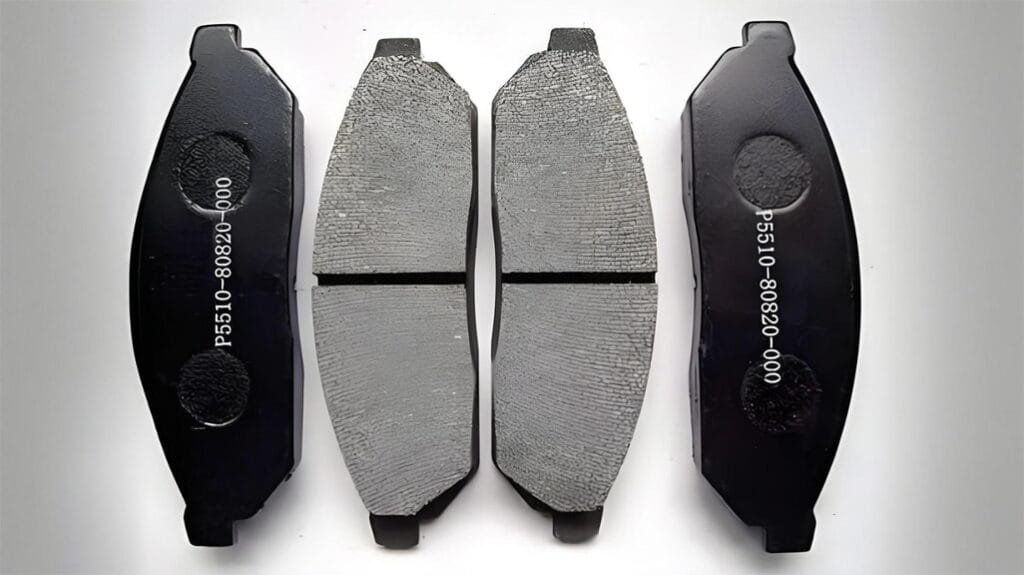
Wollastonite reduces the embedding of micro convex bodies on the mating surface through the “support bearing” mechanism during friction, thereby reducing wear. Its needle like structure can also improve the stability of friction materials and reduce cracking, but high usage may cause friction noise. In scenarios such as brake pads and clutches, wollastonite, as a substitute for short fiber asbestos, can improve wear resistance and recovery performance. Especially when compounded with materials such as graphite and Cr ₂ O Ⅲ, the friction coefficient first decreases and then increases, and the wear rate can be as low as 1.54 × 10 ⁻⁶ mm ³/(N · m).